The Untapped Goldmine: Why Duck Farming is the Next Big Thing in Kenya’s Agribusiness
Kenya’s agribusiness landscape is experiencing a quiet revolution. While the masses crowd into poultry farming with broilers and layers, a growing number of sharp-eyed agripreneurs are discovering an opportunity hiding in plain sight,duck farming. Ducks are hardy, profitable, low-maintenance, and increasingly in demand. If you are looking for your next agricultural venture, or simply want to diversify beyond conventional poultry, duck farming might just be the most strategic move you make this decade.
The Numbers Don’t Lie: Ducks vs. Chickens
Let’s start where every serious entrepreneur starts at the bottom line.
Broiler chickens have long dominated Kenya’s poultry sector, but the market is saturated. Margins are thin, competition is fierce, and the cost of production keeps rising. Duck farming, by contrast, is still an open field. Fewer farmers means less competition, stronger pricing power, and a market hungry for consistent supply.
Here is where it gets even more compelling. A mature Pekin duck can fetch between Ksh 1,200 and Ksh 2,500 in Nairobi’s premium markets, compared to a broiler chicken averaging Ksh 600 to Ksh 900. Duck eggs command between Ksh 25 and Ksh 40 per egg, compared to Ksh 12 to Ksh 18 for chicken eggs. The math is straightforward per unit, ducks generate significantly higher revenue. When you multiply that across a flock of 500 or 1,000 birds, the income difference becomes life changing.
Disease Resistance: Your Biggest Hidden Saving
Ask any chicken farmer about their biggest nightmare and they will say the same thing disease outbreaks. Newcastle disease, Gumboro, Marek’s disease, and coccidiosis wipe out entire flocks and devastate investments overnight. Biosecurity measures, vaccines, and veterinary bills eat deep into profit margins.
Ducks are built differently. They possess a naturally robust immune system, making them significantly more resistant to many of the common poultry diseases that devastate chicken flocks. While ducks can still contract avian influenza and require basic veterinary attention, their overall disease burden is dramatically lower. For farmers in regions with variable weather conditions or limited access to veterinary services, this resilience is not just a convenience it is a financial lifeline. Lower mortality rates mean more birds survive to market, and fewer emergency veterinary costs mean your margins stay intact.
Duck vs. Chicken:
The Profitability Comparison
Feed Costs: Another Advantage in Your Favour
Ducks are extraordinarily efficient foragers. Given access to a small water body, paddock, or even a simple back yard, they will supplement their diet with insects, aquatic plants, worms, and vegetation. This natural foraging behaviour reduces the amount of commercial feed required per bird.
In practice, a well managed free range or semi intensive duck operation can reduce feed costs by 20 to 35 percent compared to an equivalent chicken operation. For farmers near wetlands, rivers, or rice paddies, the savings can be even more dramatic. Ducks also thrive on agricultural by-products like kitchen scraps, vegetable waste, and crop residues making them ideal for integrated farming systems that reduce waste and maximise resource efficiency.
Over a production cycle, the cumulative savings on feed, combined with lower veterinary bills, mean that your cost of production per kilogram of duck meat or per tray of duck eggs is substantially lower than the equivalent chicken product. Higher revenue, lower costs that is the formula for exceptional profitability.
The Best Breeds for Kenya’s Climate
Not all duck breeds are created equal, and choosing the right breed for your specific goals and Kenya’s climate is critical to your success.
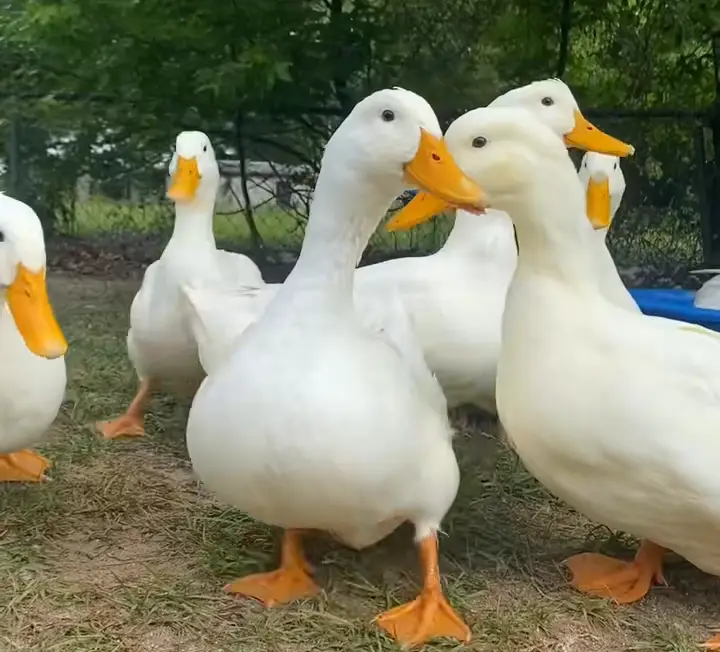
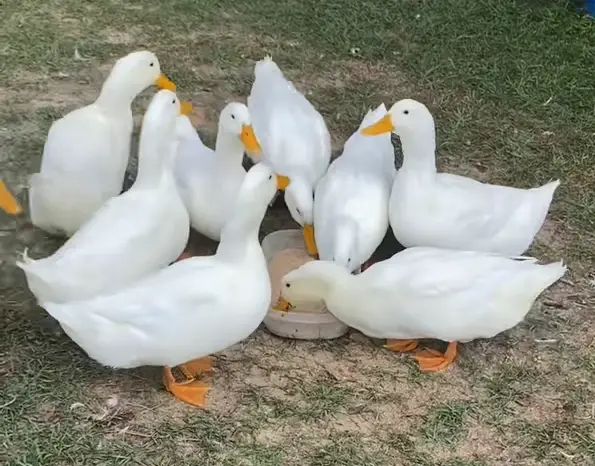
Pekin Duck is the undisputed king of meat production and is ideally suited to Kenya’s conditions. Originating from China, the Pekin is a fast-growing, white-feathered breed that reaches market weight of 3 to 3.5 kilograms in as little as seven to eight weeks. It is docile, adapts well to both intensive and free-range systems, and performs consistently even in warm climates. For agripreneurs targeting Nairobi’s restaurant market and butcheries, Pekin is your primary breed. You can conveniently acquire quality Pekin ducklings through the Lima App, making it easier for Kenyan farmers to source reliable stock.
Khaki Campbell is the egg-laying powerhouse. Developed in England but proven across tropical Africa, the Khaki Campbell is a lean, active duck that can produce 280 to 320 eggs per year a performance that rivals and often exceeds high-producing chicken layers. Their brown colouring provides natural camouflage in free range settings, and they are highly efficient converters of feed to eggs. If your goal is consistent, high value egg production for Nairobi’s health conscious consumers and specialty food markets, Khaki Campbells are your best investment.
For farmers who want the best of both worlds, a combination flock Pekins for meat and Khaki Campbells for eggs offers a diversified income stream that insulates you from market fluctuations in either product category.
A Growing Market You Cannot Ignore
Here is perhaps the most exciting part of the duck farming story the demand side is expanding rapidly, and supply is nowhere near keeping up.
Nairobi’s high-end restaurant scene is booming. From Westlands to Karen, upscale establishments are competing for premium, differentiated ingredients. Duck breast, duck confit, and Peking duck dishes are appearing on more menus than ever before, driven by a sophisticated customer base willing to pay a premium for quality and novelty. Chefs are actively seeking reliable local suppliers, and most are struggling to find them. This is your opportunity.
Simultaneously, Kenya’s Chinese community one of the fastest-growing expatriate communities in the country has an established cultural appetite for duck products. Duck is central to Chinese culinary tradition, consumed in multiple forms throughout the year. Chinese owned restaurants, supermarkets, and community networks represent a loyal, high volume market segment that currently relies on expensive imports or sporadic local supply. A farmer who positions themselves as a consistent, quality duck supplier to this community is building a business with genuine staying power.
Beyond these premium channels, duck eggs are gaining traction among health conscious Kenyan consumers who appreciate their richer nutritional profile compared to chicken eggs higher in protein, omega-3 fatty acids, and essential vitamins.
Your Next Step
Duck farming is not a get-rich-quick scheme and no legitimate agricultural business is. It requires proper housing with access to water, breed selection, basic biosecurity, and market linkages. But the barriers to entry are lower than most people assume, and the rewards for those who act decisively are significant.
Kenya’s agribusiness future belongs to those who see opportunity before the crowd arrives. The crowd has not arrived in duck farming yet. The question is whether you will be a pioneer who profits from that gap, or someone who watches others build the wealth you could have created.
The goldmine is real. The market is waiting. The ducks are ready. Are you?