How to Slash Poultry & Fish Feed Costs by 50% in Kenya Using Black Soldier Fly (BSF) Farming in 2026
If you are raising Kienyeji chickens in Kiambu, running a tilapia pond in Kisumu, or managing a small broiler unit in Nakuru, you already know the painful truth of 2026 commercial feed prices have never been higher.
A 50kg bag of layer mash now costs upwards of KES 3,800. Omena once the affordable backbone of fish and poultry protein in Kenya has become a luxury item, with prices fluctuating wildly due to overfishing and climate disruption in Lake Victoria. Soy based concentrates are equally expensive, driven by global supply chain pressures and a weak shilling.
The result Margins are being squeezed to nothing. Many small scale farmers in Kiambu, Nakuru, and Kisumu are feeding their animals at a loss or worse reducing flock sizes and abandoning fish farming altogether.
But there is a solution growing quietly in sheds and backyards across Kenya and it is being called Brown Gold. Meet the Black Soldier Fly Hermetia illucens and the farming revolution it is quietly powering.
Why BSF is the Answer
In previous years, BSF was often viewed as a science project. In 2026, it has become a commercial necessity. Black Soldier Fly larvae (BSFL) are among nature’s most efficient recyclers. They consume organic waste such as market leftovers, kitchen scraps, and fruit peels, then convert it into high-protein biomass in just two weeks.
The larvae contain roughly 42% protein and 35% fat, making them a near-perfect replacement for fishmeal. Whether you are raising improved Kienyeji chickens for the Nairobi market or managing fish ponds in the lakeside region, BSFL provides the growth boost your livestock needs without the heavy price tag of commercial bags.
BSF farming is no longer experimental. It is shamba-tested, science-backed, and increasingly supported by institutions like ICIPE (International Centre of Insect Physiology and Ecology), which has been at the forefront of insect farming research and ICIPE BSF training programmes across East Africa.
The Numbers Do Not Lie: A Cost Comparison
Here is a straightforward comparison of the cost of producing 1kg of protein from different sources, based on 2026 Kenyan market prices:
| Protein Source | Cost per kg (KES) | Protein Content |
|---|---|---|
| Commercial Layer Mash (protein portion) | KES 190–220 | ~18% crude protein |
| Dried Omena (Dagaa) | KES 180–250 | ~60–65% crude protein |
| Soy Meal Concentrate | KES 90–110 | ~44% crude protein |
| BSF Larvae (home-produced, fresh) | KES 20–40 | ~35–42% crude protein |
| BSF Larvae Meal (dried & milled) | KES 60–80 | ~40–45% crude protein |
*Costs are indicative 2026 estimates based on Nairobi and regional market rates.
The math is compelling. A farmer replacing 30–40% of their commercial feed with home produced BSF larvae can realistically cut feed costs by 40–55%, depending on flock size and production scale.
Technical Setup: The 2026 “Vertical Crate System”
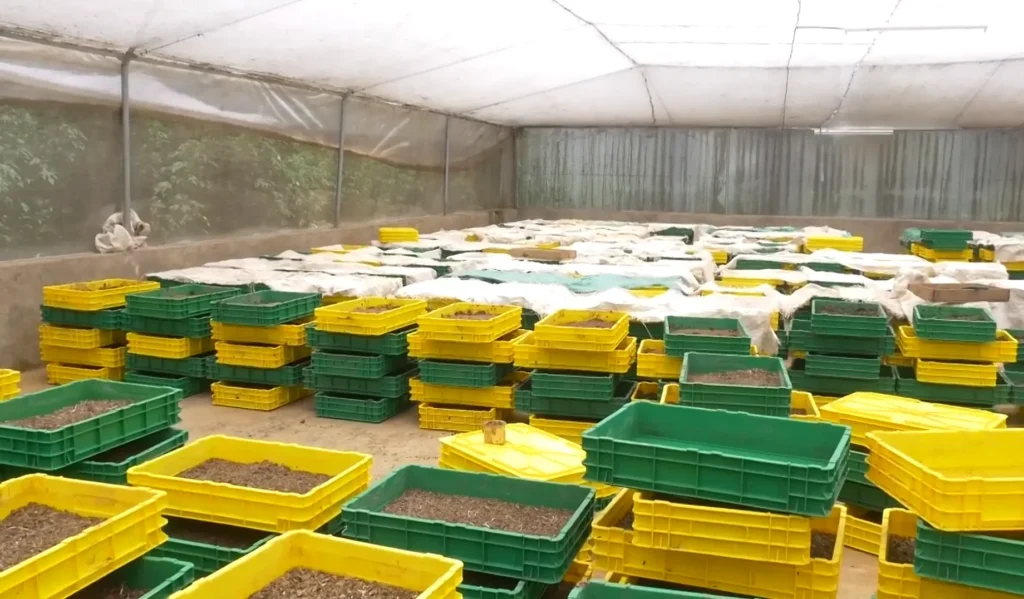
Gone are the days of digging deep concrete pits that are hard to clean and prone to flooding. The modern standard for BSF farming in Kenya 2026 is the Vertical Crate System. This method is perfect for farmers in high-density areas like Kiambu where land is at a premium.
Why Vertical Crates?
- Space Efficiency: You can stack crates up to 10 levels high, producing hundreds of kilos of larvae in a tiny 2×2 meter space.
- Hygiene: Plastic crates are easy to wash, reducing the risk of smells or unwanted pests.
- Harvesting: It allows for “Self-Harvesting” designs where mature larvae crawl out of the waste and into a collection bin automatically.
What You Need:
- A “Love Cage”: A netted enclosure (usually 1m x 1m) where adult flies mate and lay eggs.
- Egg Attractants: Small wooden slats or corrugated cardboard placed over a “bait” of fermenting fruit waste.
- Rearing Trays: Standard plastic bread crates or custom-made wooden trays lined with plastic.
- The Substrate: Organic waste sourced from local markets like Muthurwa .
Where to Learn and Get Starter Colonies
You cannot just catch wild flies and hope for the best. To succeed, you need a stable starter colony of BSF eggs or “pre-pupae.”
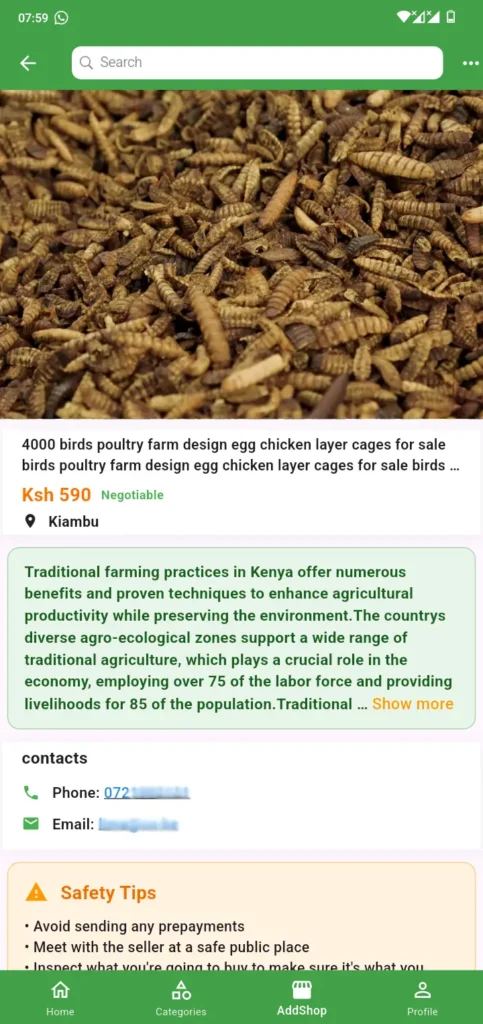
- Reliable Sellers: For the best results, use the Lima App. It has become the go-to digital marketplace for Kenyan agribusiness, connecting you with reputable BSF breeders who sell “seed” colonies that are productive and disease free.
- Training: If you are a beginner, look for ICIPE BSF training programs. ICIPE remains the gold standard for insect research in Africa, offering practical courses on how to maintain a healthy colony in the Kenyan climate.
- Feeding the Flies: Partner with “Mama Mbogas” or wholesale traders at Muthurwa Market. They are often happy to have you take away fruit and vegetable waste for free, as it saves them disposal fees.
The ‘Frass’ Bonus: Turning Waste Into a Second Revenue Stream
BSF farming produces more than just larvae.
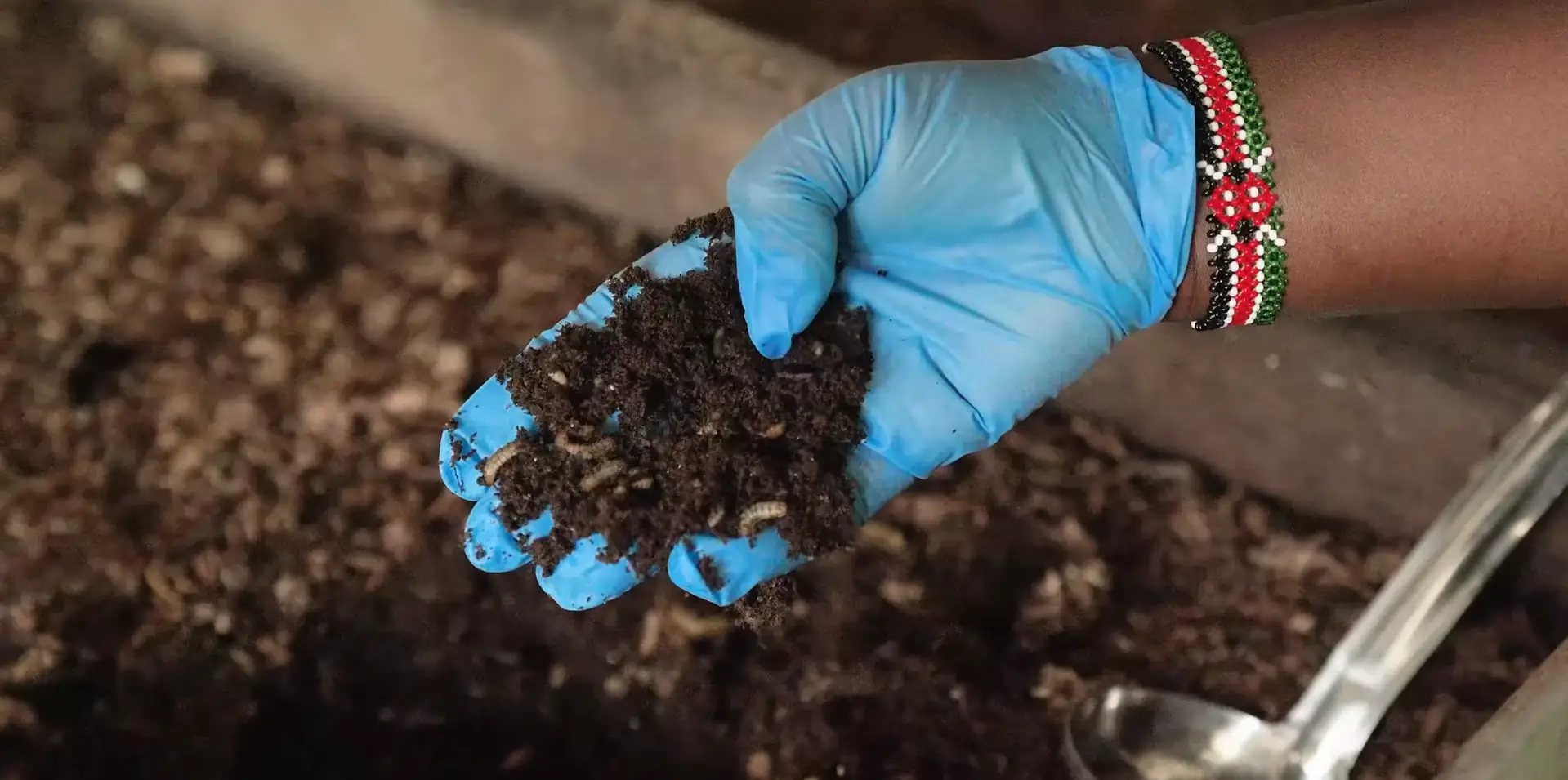
As the insects consume organic waste, they produce a nutrient-rich byproduct known as frass.
This material is a powerful organic fertilizer.
BSF Frass Fertilizer Benefits
Farmers across Kenya are beginning to appreciate the value of frass because it:
- improves soil microbial activity
- enhances root development
- increases crop yields
- improves soil water retention
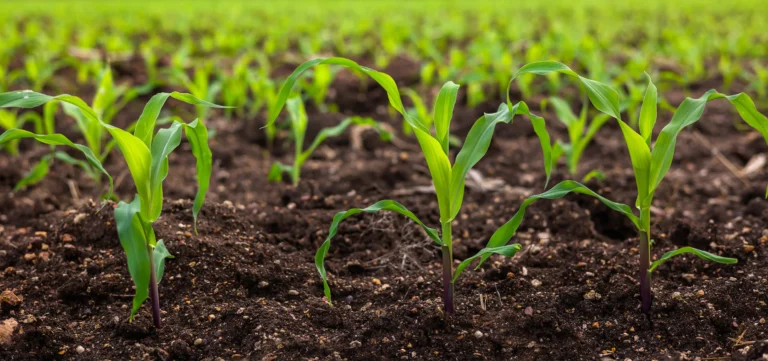
For growers in Kiambu and Nakuru, frass is particularly valuable for crops like:
- avocado
- coffee
- vegetables
- macadamia
Many farmers now sell frass directly to orchard owners.
This creates a second income stream from the same BSF production system.
A small BSF unit can produce several bags of frass every month, which can be sold as organic fertilizer.
Reducing Feed Costs for Kienyeji Chicken & Fish
Farmers who integrate BSF larvae into their feeding systems often see improvements in:
- bird growth rates
- egg production
- fish growth
- feed conversion efficiency
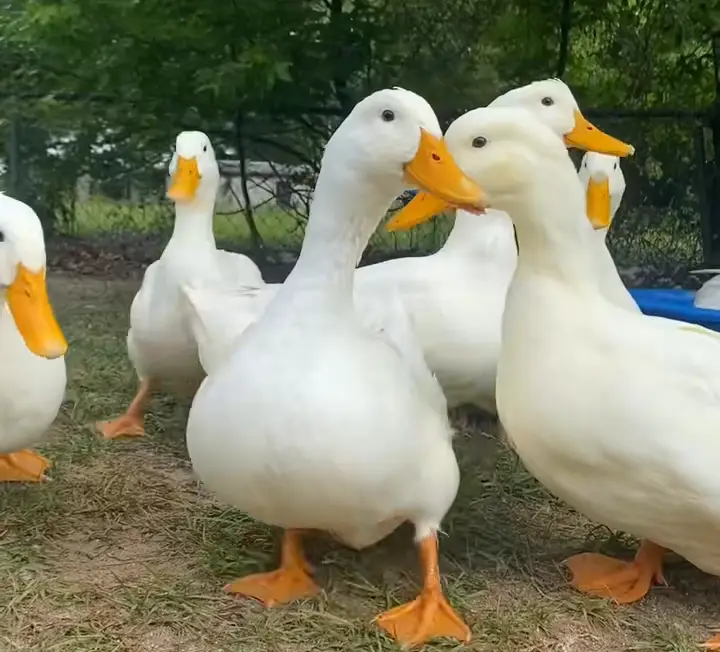
For Kienyeji chicken, larvae can be fed:
- fresh
- dried
- mixed with maize bran
Many farmers replace 20–40% of commercial feed protein with larvae.
For tilapia farmers in Kisumu, BSF meal can partially replace fishmeal in feed formulations.
The result is lower costs and healthier animals.
How to Start Your Pilot Unit This Week
You do not need a large capital investment or a sophisticated setup to begin. Here is a practical starter path for a Kenyan farmer with limited resources:
Week 1 — Build your first crate unit: Source 4–6 plastic crates or build simple wooden ones. Set up in a shaded area out of direct rain. Budget: KES 2,000–4,000.
Week 2 — Source your starter colony: Order BSF eggs or young larvae through the Lima app from a verified seller. Follow their guidance on substrate preparation. Budget: KES 500–1,500.
Week 3 — Begin substrate feeding: Collect organic waste from your kitchen, a nearby market, or a food processor. Feed daily in measured quantities.
Week 4 — First harvest: By day 14–18, larvae will self-harvest. Weigh your output, calculate your cost per kilogram, and begin supplementing your existing animal feed.
Start small. Observe carefully. A pilot unit of 10–20 crates can produce enough larvae to meaningfully supplement the feed for 50–100 Kienyeji chickens or a modest tilapia pond. Once you are comfortable with the biology and the process, scaling up is straightforward.
Start Small, Think Big: Your First Step Starts Today
The feed cost crisis of 2026 is real, but so is the opportunity. Black Soldier Fly larvae for chicken feed and fish farming is not a trend. It is a proven, scalable, and locally appropriate technology that is already helping farmers across Kiambu, Nakuru, Kisumu, and beyond reclaim their margins.
The question is not whether BSF farming works. It does. The real question is whether you will start this week or wait until rising feed costs force your hand.
Gather four crates. Find a source of organic waste. Download the Lima app and connect with a reputable BSF colony supplier. Then take the first step toward producing your own Brown Gold right there on your shamba.
Your animals will eat better. Your costs will drop. And your land will thank you for the frass.